Oxytocin Receptor
OXTR
The oxytocin receptor belongs to the G-protein-coupled seven-transmembrane receptor superfamily. Its main physiological role is regulating the contraction of uterine smooth muscle at parturition and the ejection of milk from the lactating breast. The oxytocin receptors are activated in response to binding oxytocin and a similar nonapeptide, vasopressin. Oxytocin receptor triggers Gi or Gq protein-mediated signaling cascades leading to the regulation of a variety of neuroendocrine and cognitive functions.
Oxytocin is a nonapeptide of the neurohypophyseal protein family that binds specifically to the oxytocin receptor to produce a multitude of central and peripheral physiological responses. In vivo, oxytocin acts as a paracrine and/or autocrine mediator of multiple biological effects. These effects are exerted primarily through interactions with G-protein-coupled oxytocin/vasopressin receptors, which, via Gq and Gi, stimulate phospholipase C-mediated hydrolysis of phosphoinositides.
All Product Categories
-
Oxytocin Receptor Related Products (84)
Related Products (84)

-
Antibodies (2)
-
[Asp5]-Oxytocin acetate
![[Asp5]-Oxytocin acetate](https://file.medchemexpress.com/product_pic/hy-p3217a.gif "Click to View [Asp5]-Oxytocin acetate Product Detail") 0 ImagesCat. No.: HY-P3217APurity: 99.51%[Asp5]-Oxytocin acetate is the first 5-position neurohypophyseal hormone analogue possessing significant biological activity. [Asp5]-Oxytocin acetate causes uterine contractions in vitro, enhanced by Mg2+. [Asp5]-Oxytocin acetate has the ability of rat uteroconstrictor, avian vasodilator, and rat antidiuretic.
0 ImagesCat. No.: HY-P3217APurity: 99.51%[Asp5]-Oxytocin acetate is the first 5-position neurohypophyseal hormone analogue possessing significant biological activity. [Asp5]-Oxytocin acetate causes uterine contractions in vitro, enhanced by Mg2+. [Asp5]-Oxytocin acetate has the ability of rat uteroconstrictor, avian vasodilator, and rat antidiuretic.
-
WAY-267464
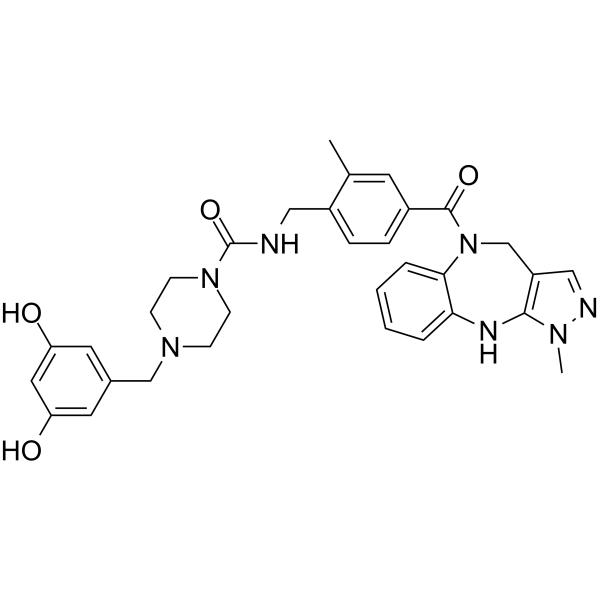 0 ImagesWAY-267464 is a non-peptide oxytocin receptor (OTR) agonist. WAY-267464 can impair social recognition memory in rats through a vasopressin 1A receptor antagonist action. WAY-267464 can be used for the research of psychiatric disorders, such disorders include autism spectrum disorder, schizophrenia, and social anxiety disorder.
![[Leu3]-Oxytocin](https://file.medchemexpress.com/product_pic/hy-p3221.gif "Click to View [Leu3]-Oxytocin Product Detail")
-
Lysipressin acetate
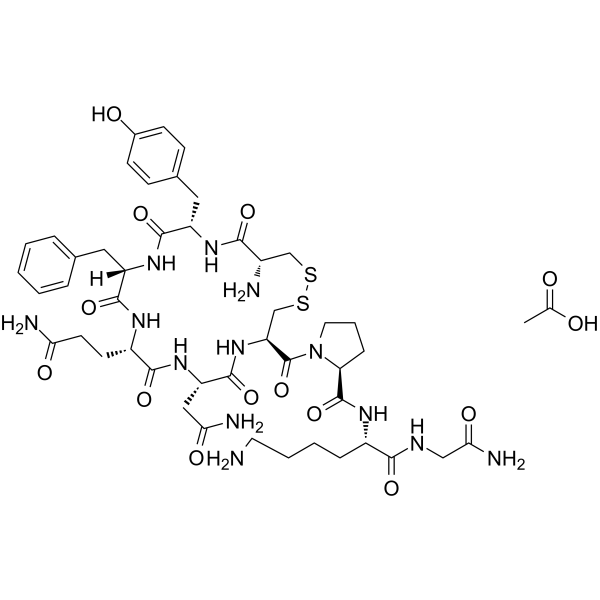 0 ImagesSynonyms: Lysine vasopressin acetate; [Lys8]-Vasopressin acetateLysipressin acetate (Lysine vasopressin acetate; [Lys8]-Vasopressin acetate) is a neurohypophyseal nonapeptide with dual cardiovascular regulatory activities of peripheral pressor action and central hypotensive action, and it also regulates pain perception in the body. Lysipressin acetate is an Oxytocin Receptor agonist, with a Ki value of 10.2 nM for porcine OT receptor. Lysipressin acetate stimulates contraction of rabbit bladder smooth muscle via V1-vasopressin receptor. The central hypotensive effect of Lysipressin acetate depends on the sympathetic tone pathway. Lysipressin acetate dose-dependently prolongs tail-flick latency in rats, producing a stable central antinociceptive effect. Lysipressin acetate can be used in studies related to cardiovascular regulation, hypertension and pain.
-
L-372662
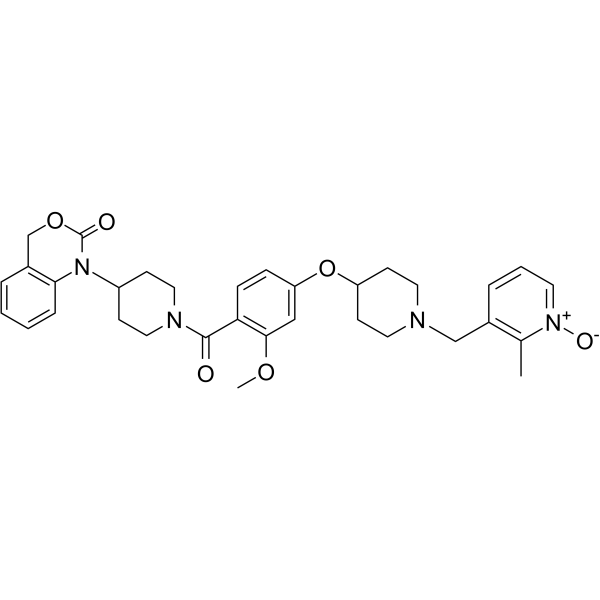 0 ImagesL-372662 is a potent and orally active non-peptide oxytocin antagonist with a Ki value of 4.8. The Kd value of L-372662 for wild-type hOTR and [A318G]OTR is 5.8 nM and 73 nM. L-372662 shows selectivity to OTR:V1aR.
![[Glu4]-Oxytocin](https://file.medchemexpress.com/product_pic/hy-p3218.gif "Click to View [Glu4]-Oxytocin Product Detail")
-
TC OT 39
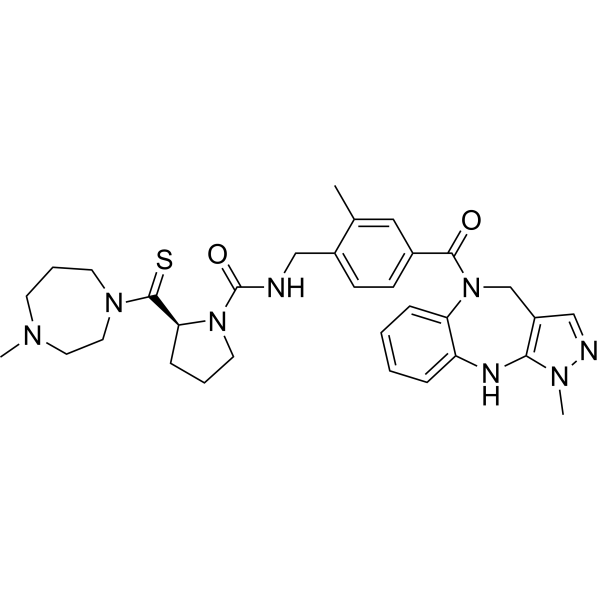 0 ImagesCat. No.: HY-108678CAS No.: 479232-57-0TC OT 39 is a synthetic oxytocin analog, as well as a selective agonist of oxytocin receptor (OXTR, EC50=180 nM). TC OT 39 is also an Avprla vasopressin receptor antagonist with an Ki value of 330 nM. TC OT 39 exhibits sedative effects in mouse models.
-
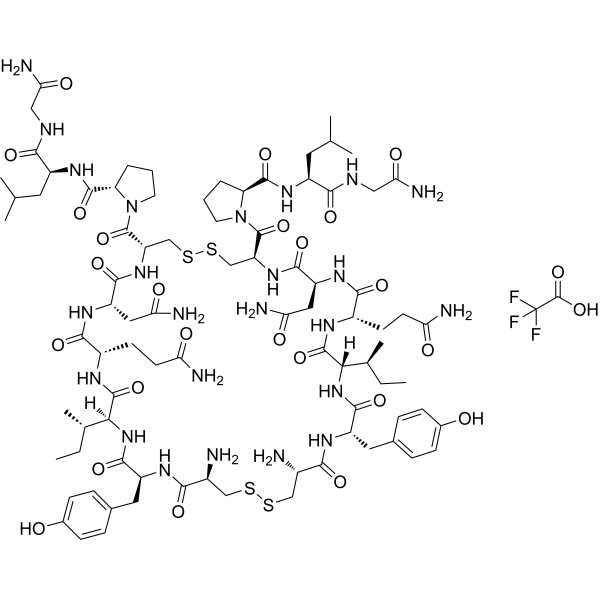
Oxytocin free acid TFA
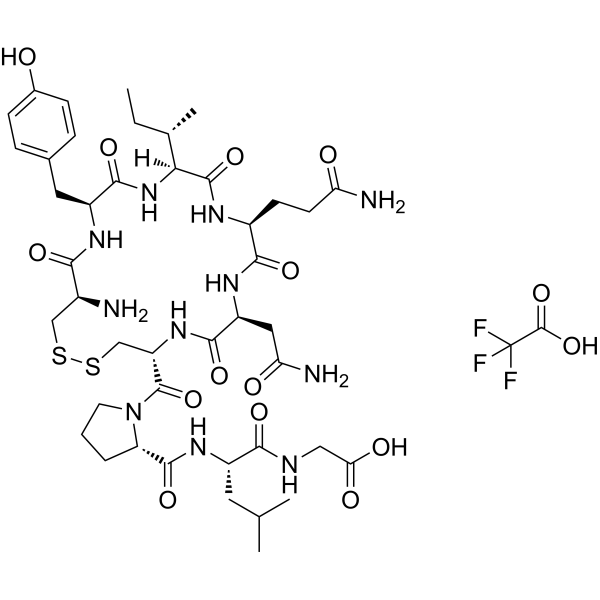 0 ImagesCat. No.: HY-P3216BPurity: 99.61%Synonyms: 9-Deamidooxytocin TFAOxytocin free acid (9-Deamidooxytocin) TFA is an analog of oxytocin in which the glycinamide residue at position 9 in oxytocin has been replaced by a glycine residue. Oxytocin is a pleiotropic, peptide hormone with broad implications for general health, adaptation, development, reproduction, and social behavior.
-
Oxytocin parallel dimer
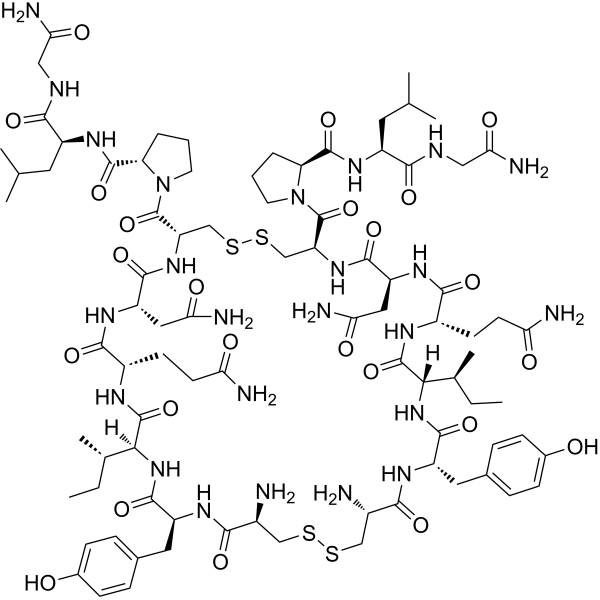 0 ImagesOxytocin parallel dimer is the disulfide-bridged homo peptide dimer. Oxytocin dimer has oxytocin and vasopressin-like activity with less toxic than oxytocin.
![[Arg8]-Vasotocin](https://file.medchemexpress.com/product_pic/hy-p1574.gif "Click to View [Arg8]-Vasotocin Product Detail")
-
Pro8-Oxytocin TFA
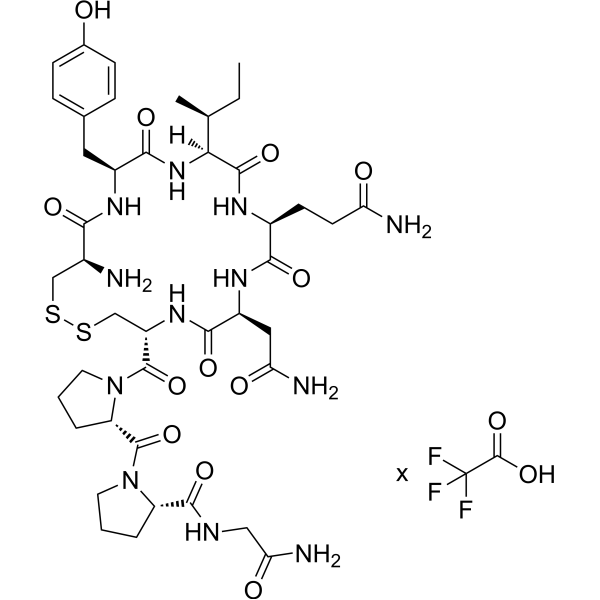 0 ImagesCat. No.: HY-P4990APurity: 99.68%Pro8-Oxytocin TFA is a a modified oxytocin (OXT) ligand. Pro8-Oxytocin produces more potent and efficacious responses at primate OXTR and stronger behavioral effects than the consensus mammalian OXT ligand (Leu8-Oxytocin). Pro8-Oxytocin TFA produce a less efficacious response than Vasopressin (HY-B1811) (AVP) at human AVPR1a and higher efficacious response than AVP at marmoset AVPR1a.
-
[Asp5]-Oxytocin
![[Asp5]-Oxytocin](https://file.medchemexpress.com/product_pic/hy-p3217.gif "Click to View [Asp5]-Oxytocin Product Detail") 0 Images[Asp5]-Oxytocin is the first 5-position neurohypophyseal hormone analogue possessing significant biological activity. [Asp5]-Oxytocin causes uterine contractions in vitro, enhanced by Mg2+. [Asp5]-Oxytocin has the ability of rat uteroconstrictor, avian vasodilator, and rat antidiuretic.
0 Images[Asp5]-Oxytocin is the first 5-position neurohypophyseal hormone analogue possessing significant biological activity. [Asp5]-Oxytocin causes uterine contractions in vitro, enhanced by Mg2+. [Asp5]-Oxytocin has the ability of rat uteroconstrictor, avian vasodilator, and rat antidiuretic.
-
LIT-001 free base
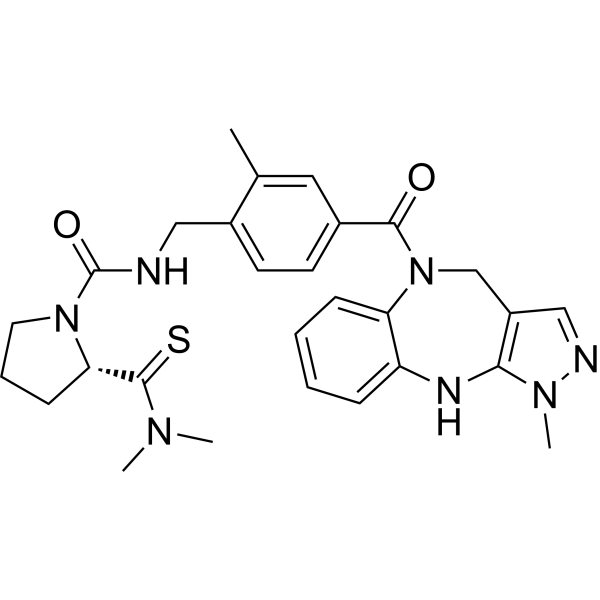 0 ImagesCat. No.: HY-124733CAS No.: 2245072-20-0LIT-001 free base is the first nonpeptide oxytocin receptor (OT-R) agonist (EC50=55 nM; Ki=226 nM). LIT-001 free base improves social interaction in a mouse model of autism.
-
OT-R antagonist 1
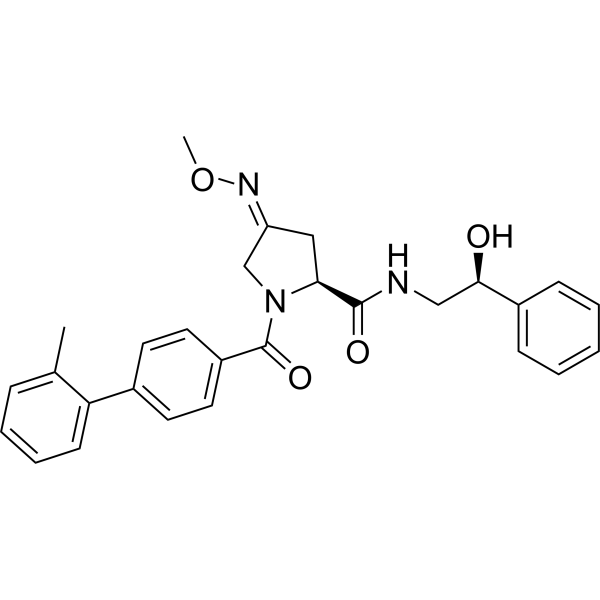 0 ImagesCat. No.: HY-15015CAS No.: 364071-17-0Synonyms: Oxytocin receptor antagonist 1OT-R antagonist 1 is a new potent and selective nonpeptide low molecular weight OT-R antagonist.
![[Arg8]-Vasotocin TFA](https://file.medchemexpress.com/product_pic/hy-p1574a.gif "Click to View [Arg8]-Vasotocin TFA Product Detail")
-
Pro8-Oxytocin
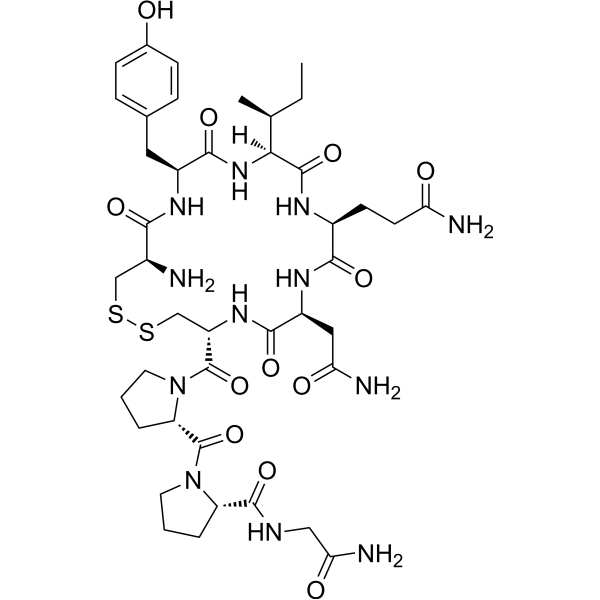 0 ImagesPro8-Oxytocin is a a modified oxytocin (OXT) ligand. Pro8-Oxytocin produces more potent and efficacious responses at primate OXTR and stronger behavioral effects than the consensus mammalian OXT ligand (Leu8-Oxytocin). Pro8-Oxytocin produce a less efficacious response than Vasopressin (HY-B1811) (AVP) at human AVPR1a and higher efficacious response than AVP at marmoset AVPR1a.
-
OT-R antagonist 2
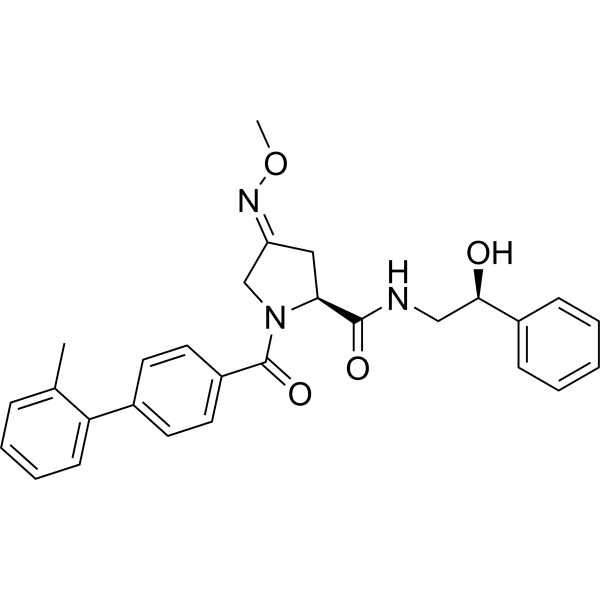 0 ImagesSynonyms: Oxytocin receptor antagonist 2OT-R antagonist 2 is a nonpeptide low molecular weight OT-R antagonist.
-
(d(CH2)51,Tyr(Me)2,Orn8)-Oxytocin
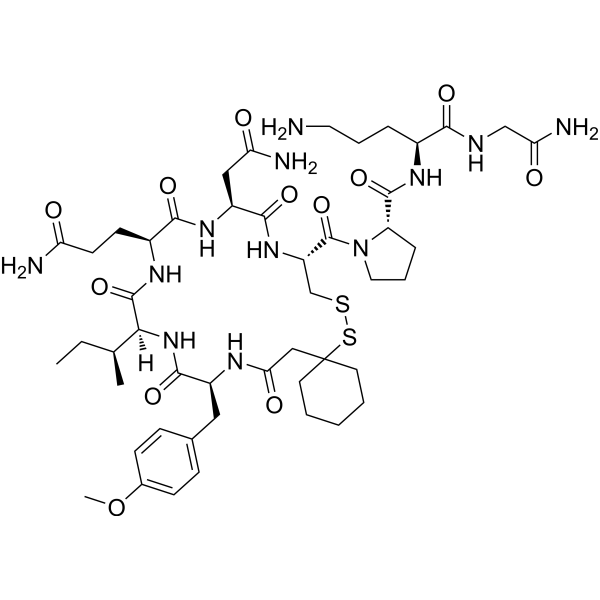 0 Images(d(CH2)51,Tyr(Me)2,Orn8)-Oxytocin (OVT) is an oxytocin receptor antagonist. (d(CH2)51,Tyr(Me)2,Orn8)-Oxytocin can be used for the research of neurological disease.
-
WAY-267464 hydrochloride
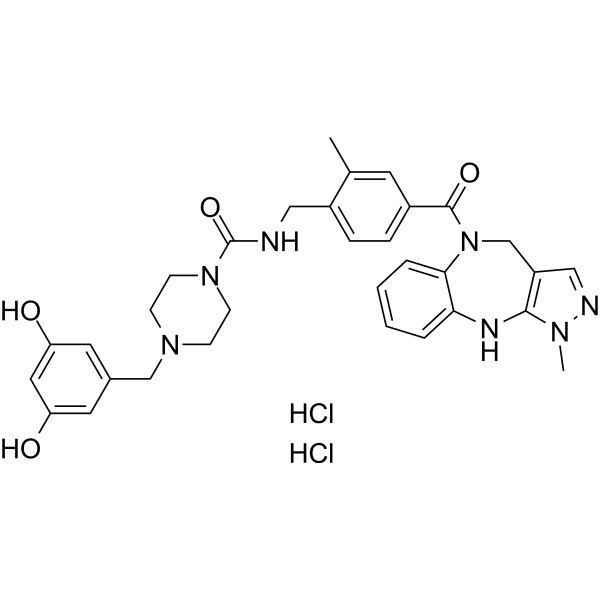 0 ImagesWAY-267464 (hydrochloride) is a non-peptide oxytocin receptor (OTR) agonist. WAY-267464 (hydrochloride) can impair social recognition memory in rats through a vasopressin 1A receptor antagonist action. WAY-267464 (hydrochloride) can be used for the research of psychiatric disorders, such disorders include autism spectrum disorder, schizophrenia, and social anxiety disorder.